Urdu
Urdu Russia
 Turkey
 South Africa
Pakistan's pharmaceutical sector is growing fast. New drug manufacturing facilities are opening in Karachi, Lahore, and Islamabad every year, and each one needs a lab gas piping system that actually meets regulatory requirements. Getting this wrong isn't just expensive — it can shut down your production line.
Why PSQCA Standards Matter for Your Gas Lines
The Pakistan Standards and Quality Control Authority sets specific requirements for laboratory infrastructure in pharmaceutical facilities. Your lab gas piping system isn't exempt from this. PSQCA inspectors check gas line integrity during facility audits, and a failed inspection means production delays.
The core requirement is straightforward: every gas delivery point must provide consistent, contamination-free gas at the correct pressure. Sounds simple, but the details matter. Nitrogen lines feeding analytical instruments need purity levels above 99.995%, which means your piping material can't introduce contaminants. Stainless steel 316L with electropolished interior surfaces is the standard choice — copper won't cut it for high-purity applications.
Two-Stage Pressure Control Is Non-Negotiable
Raw cylinder pressure sits around 150-200 bar. Your instruments need 2-5 bar. Dropping pressure in a single stage creates turbulence, temperature fluctuations, and inconsistent flow. That's why every properly designed lab gas piping system uses two-stage regulation.
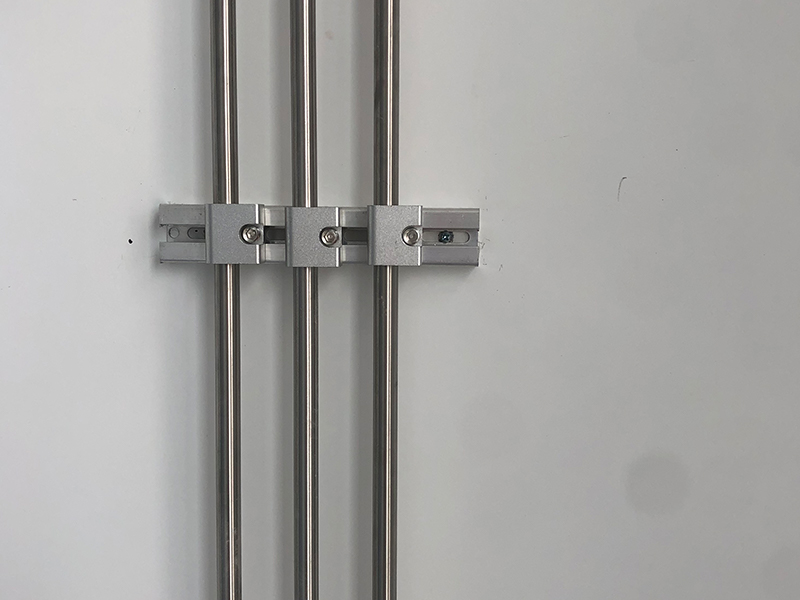
Stage one happens at the cylinder room or manifold — bringing pressure down to 10-15 bar. Stage two sits near the point of use, fine-tuning delivery pressure to match each instrument's requirements. HJSLab's gas piping systems for Pakistan labs include point-of-use panels with individual regulators, gauges, and shut-off valves for each gas type.
Here's something many contractors miss: the pressure drop across your piping run. Long pipe runs with multiple bends lose pressure. If your cylinder room is 50 metres from the lab, you need to account for this in your Stage 1 outlet pressure. HJSLab's engineers calculate pressure drop for every installation using actual pipe lengths and fitting counts — no guesswork.
Material Selection for Karachi's Climate
Karachi's coastal humidity is tough on metal components. Standard carbon steel fittings corrode within months. Even stainless steel needs the right grade — 304 works for general service, but 316L is worth the extra cost for anything exposed to salt air or chemical fumes.
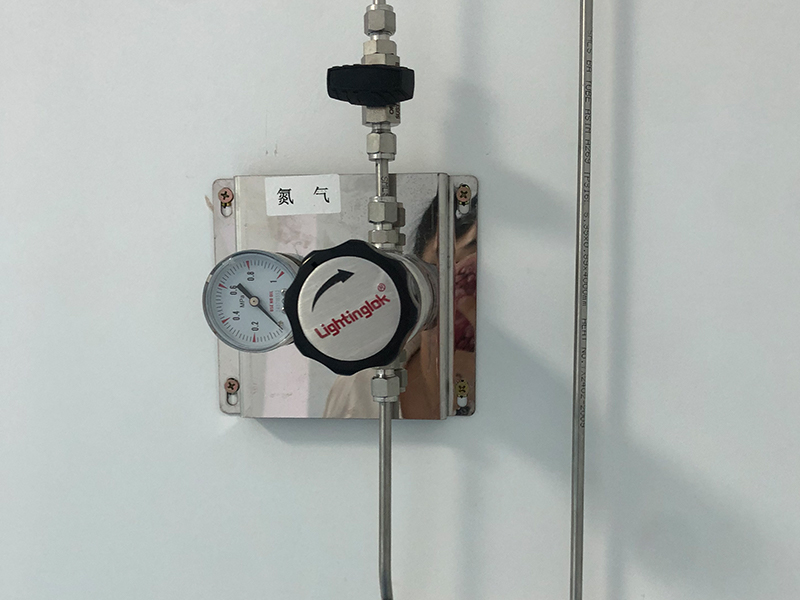
HJSLab uses orbital-welded 316L stainless steel tubing for all high-purity gas lines in Pakistan installations. Orbital welding produces consistent, repeatable welds with minimal internal oxidation — hand welding simply can't match this quality for gas piping.
For bulk gas lines carrying nitrogen or compressed air at lower purity requirements, copper tubing with brazed fittings remains cost-effective. But don't mix copper and stainless in the same system without proper transition fittings — galvanic corrosion will eat through the joint within a year.
Safety Systems That Pakistani Labs Often Overlook
Excess flow valves, flashback arrestors, automatic cylinder switchover — these aren't optional extras. They're safety essentials that prevent gas leaks from becoming disasters.
Every HJSLab lab gas piping system installation in Pakistan includes gas detection sensors at cylinder storage areas and at each laboratory zone. The sensors connect to an alarm panel and automatic shut-off valves. If a leak occurs, gas supply cuts off before anyone needs to evacuate.
One last point: documentation. PSQCA auditors want to see installation records, pressure test certificates, and maintenance logs. HJSLab provides a complete documentation package with every installation — test reports, as-built drawings, and a maintenance schedule tailored to Pakistan's operating conditions. Don't treat paperwork as an afterthought. In pharmaceutical manufacturing, if it isn't documented, it didn't happen.