Urdu
Urdu Russia
 Turkey
 South Africa
Here's a fact that catches most electronics lab managers off guard: a static discharge of just 100 volts can destroy a MOSFET. You won't feel it — humans don't sense anything below about 3,000 volts. So by the time you notice a zap, you've already fried dozens of components sitting on your bench. That's why ESD protection isn't optional for electronics and semiconductor labs. It's the foundation everything else sits on.
HJSLab, a laboratory equipment manufacturer based in Suzhou, China, has been building ESD-protected full steel lab benches specifically for electronics facilities across Pakistan. The company's approach isn't just slapping an anti-static mat on top of a regular bench — it's a three-layer system engineered from the ground up.
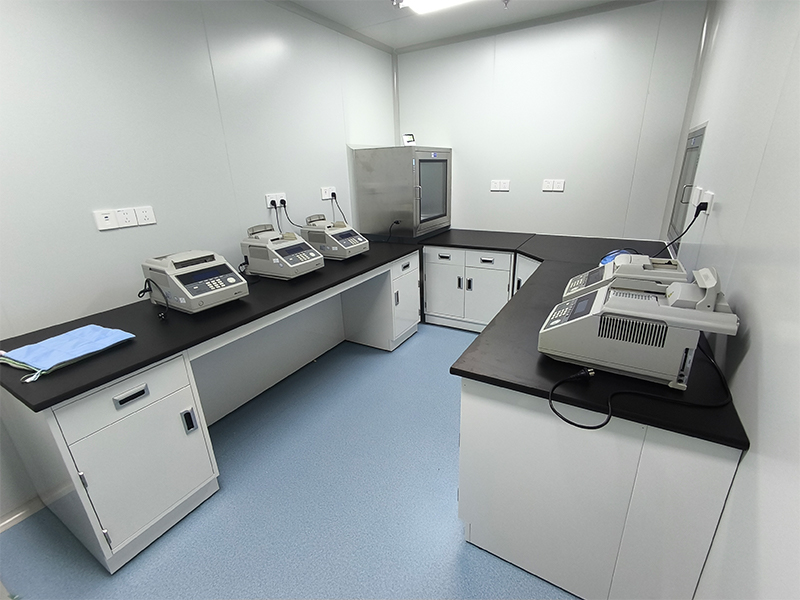
Why Full Steel Frames Are Natural ESD Allies
Most lab benches use mixed materials — wooden cabinets with steel legs, or particleboard tops on metal frames. The problem? Wood and particleboard are insulators. They trap charge instead of letting it drain away. A full steel frame, on the other hand, acts as one continuous conductor. Connect it to a proper earth ground, and static charge has a clear, low-resistance path straight into the ground. No charge buildup. No surprise discharges.
The Three-Layer ESD Protection System
Layer one is the countertop. HJSLab uses anti-static laminate surfaces with a surface resistance between 10^6 and 10^9 ohms, which sits right in the sweet spot defined by IEC 61340-5-1. Too conductive and you risk short circuits if someone drops a live PCB on the surface. Too resistive and charge can't dissipate fast enough. This range bleeds off static slowly and safely.
Layer two is the grounding infrastructure. Every HJSLab ESD bench comes with dedicated grounding points — brass ring terminals with star washers that bite through paint and oxide layers to make solid metal-to-metal contact. There's a 10mm grounding stud on each bench leg, plus bonding jumpers between connected bench sections. You'll also find banana-jack ports on the work surface for connecting wrist straps and equipment.
Layer three is the floor. HJSLab recommends conductive vinyl flooring or ESD epoxy coatings with resistance below 10^9 ohms. The bench's grounding system ties into the floor's grounding grid, creating a complete circuit from operator to bench to floor to earth.
Pakistan Standards and Practical Considerations
For labs operating under PSQCA oversight, ESD compliance documentation matters. HJSLab provides test certificates for surface resistance, grounding continuity, and charge decay time with every shipment. The benches are tested per IEC 61340-5-1 at the factory before crating.
One thing to check before ordering: your building's grounding system. Pakistan's older lab buildings sometimes have grounding that's deteriorated or was never properly installed. HJSLab's technical team can review your facility's grounding schematic remotely and flag issues before you invest in ESD benches that won't perform without a solid earth connection.
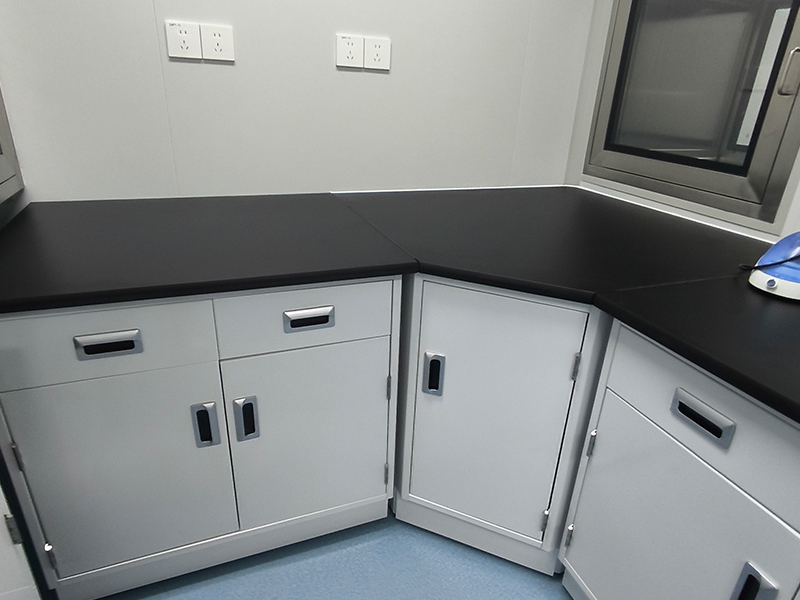
Cost and Logistics from Suzhou to Pakistan
ESD lab benches from European suppliers typically run two to three times what HJSLab charges. The price gap isn't about corners being cut — it's about manufacturing scale. HJSLab's Suzhou factory produces thousands of bench units monthly, which drives down per-unit cost by 30 to 40 percent compared to Western equivalents. Thanks to CPEC infrastructure, shipping from Suzhou to Karachi now takes just 15 to 18 days by sea, with customs clearance support included.
If your electronics lab in Pakistan needs ESD-compliant workstations, don't gamble with generic furniture. Get in touch with HJSLab for a site-specific ESD protection plan that covers the bench, the grounding, and the floor — all from one manufacturer who understands what it takes to keep sensitive components safe.