Urdu
Urdu Russia
 Turkey
 South Africa
Spend a day in any busy lab in Karachi or Lahore and you’ll see the same mess everywhere. Beakers stacked tightly next to Erlenmeyer flasks, pipettes sprawled across shelves meant for volumetric flasks, and graduated cylinders squeezed into any empty space folks can find. It’s not really a system—it’s more like controlled chaos that’s always one step away from complete disorder.
Why bother with proper glassware cabinet zoning? Well, it actually goes way beyond appearances. Studies in laboratory management show that keeping things organized reduces broken glassware by almost 40 percent and saves researchers half the time they’d otherwise waste hunting for equipment. For labs trying to stretch every rupee, that means they lose fewer beakers and their workflow gets faster—pretty much instant savings.
In Pakistan, most university and pharmaceutical labs rotate multiple shifts and share equipment. If twenty people fight over the same cabinet, everyone needs to grab what they need fast and put stuff back where it belongs. Otherwise, things just fall apart.
So, what actually works? HJSLab suggests splitting every glassware cabinet into three zones based on how often stuff gets used. Middle shelves—easy to grab—should hold everyday items like beakers, conical flasks, and measuring cylinders. The upper shelves are good for specialized gear, things you only pull out once a week, like condensers, distillation assemblies, and separating funnels. Heavy or rarely used items, think large reagent bottles or desiccators, get parked on the bottom shelves.
Within each zone, sort by type and size. Stack all your 250ml beakers together, separate from the 500ml ones. Stand pipettes upright in racks so they don’t roll and chip. Round-bottom flasks? Keep them in cork rings so they don’t tip over.

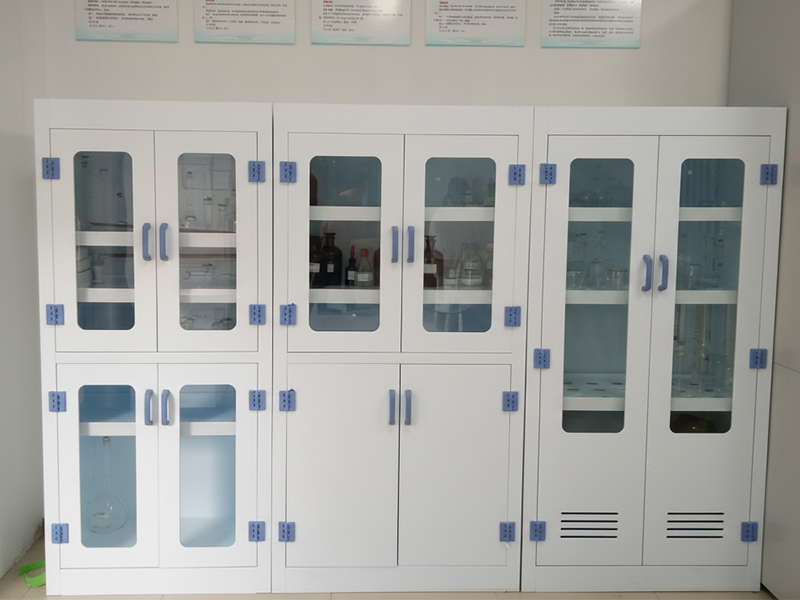
Of course, cabinet design makes a big difference. HJSLab cabinets have adjustable perforated shelves, letting washed glassware air-dry without nasty moisture buildup. Safety lips along the edges keep things from sliding out if someone swings the door open too fast. Glass doors mean you can look in and spot what’s missing without pulling everything out. In bigger labs, drawers on the lower shelves let folks reach heavy items easily—the shelves can hold up to 80 kilograms spread out evenly.
If you’re running a Pakistani lab team, here are a few practical tips: Label every shelf section clearly, use laminated labels so they’ll handle splashes and moisture. Pick one team member per shift to act as the glassware coordinator—to make sure everything gets returned to its spot at the end of the session. Do a monthly inventory to find broken pieces before someone gets hurt.
Honestly, proper storage isn’t just about looking tidy. It’s essential for safety and keeping the lab running smoothly. Need help? HJSLab can sort out cabinet solutions to fit your team’s needs.