Urdu
Urdu Russia
 Turkey
 South Africa
Chemical Spill Reality in Pakistan's Labs
Every day in Karachi's pharmaceutical labs, Lahore's research centers, and Rawalpindi's industrial testing facilities, someone handles a container of acetone, sulfuric acid, or caustic soda. One slip, one distracted moment, and liquid chemistry spreads across an unsafe bench—soaking into wood grain, pooling on unprotected steel, or seeping through cracks into storage drawers below. The cost isn't just the spilled reagent. It's contaminated equipment, damaged samples, a rushed cleanup that takes hours, and worst case, a technician's burned hand or respiratory exposure in a poorly ventilated lab. PSQCA regulations demand safe chemical storage and spill response, but many Pakistani labs work with benches that don't support containment.
Why PP Containment Benches Win in Chemistry Labs
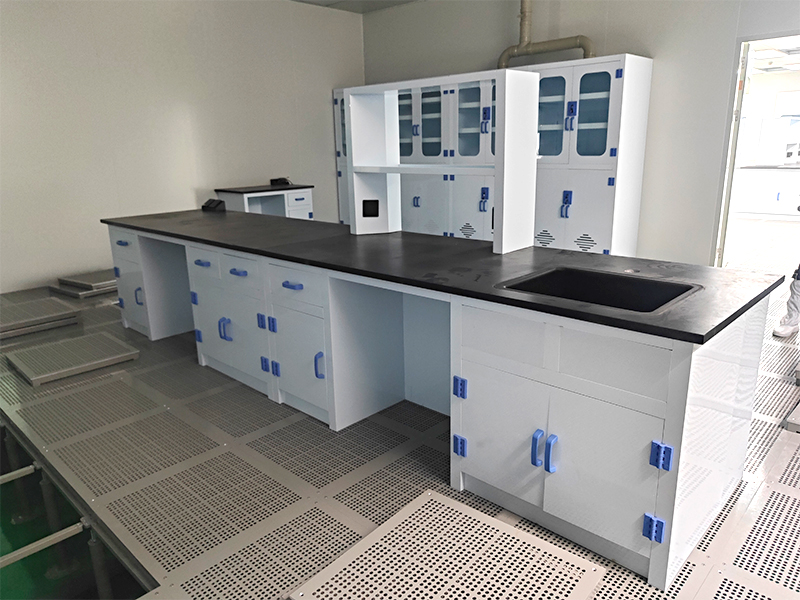
Polypropylene (PP) isn't flashy, but it's forensically smart for chemistry work. PP won't degrade when contacted by 37% hydrochloric acid, 70% nitric acid, acetone, toluene, or chloroform—exactly the reagents Pakistan's labs use daily. Unlike steel that rusts and plywood that swells, PP stays dimensionally stable when wet. HJSLab's PP benches use 25mm solid extruded sheet (not PVC foam or thin laminates) joined with heat-sealed seams that are stronger than the surrounding material. The raised edge design creates a 150mm lip that catches spills before they roll onto the floor. Beneath the work surface sits a molded secondary tray—a built-in containment zone that captures 85-90% of accidental liquid spills. If a 500ml beaker of hydrochloric acid tips over, it doesn't pour onto the drawer below; it pools in the tray where it can be safely wiped and neutralized with sodium bicarbonate.
Drainage and Cleanup Designed for Reality
The secondary tray has an angled floor that slopes to a corner drain valve. You don't have to fish spilled acid out manually—open the valve and it flows into a collection bottle beneath. This matters when you're handling 50ml of acetic acid at 4pm on a Friday and you want a 10-second cleanup, not a 45-minute neutralization ceremony. The drain valve uses 180° ball-lock closure so there's zero risk of dripping when the bottle is removed and swapped out. PP won't chemically react with the acid—no corrosion, no degradation. When the collection bottle is full, you hand it to your chemical waste contractor; they handle final disposal per Pakistani environmental rules. For labs processing samples in batches, this design saves so much time and stress. And because the tray is integral to the bench (not bolted on), there's no gap where liquid sneaks underneath—nothing to maintain, nothing to fail.
Operator Safety and Long-Term Value
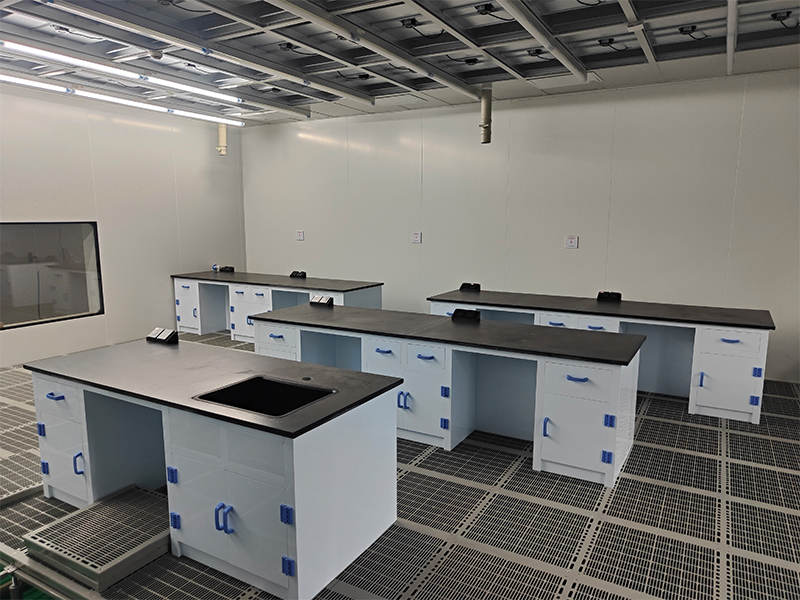
Your techs don't wear hazmat suits to a chemistry lab—they wear basic nitrile gloves and maybe safety glasses. If a spill happens, the raised edge and containment tray mean they're not exposed to splashing or vapor clouds that would otherwise blow across the bench. The secondary tray also isolates the spill from items stored below—reagent bottles, documentation, even the structural drawer—keeping your entire bench safe. And because PP is naturally non-porous, there's no staining, no odor absorption. After you empty the tray and wipe it clean, it looks new. Compare that to wood or composite benches where chemical stains become permanent and odors linger for weeks. HJSLab manufactures these benches at our ISO 9001 facility in Suzhou with quality control at every assembly step. We've shipped over 2000 PP containment benches to laboratories across Pakistan, and the warranty covers manufacturing defects for 5 years. For chemical labs running continuous operations, one PP bench can last 15+ years if treated with normal care, making the per-year cost genuinely affordable.