Urdu
Urdu Russia
 Turkey
 South Africa
Every lab manager in Pakistan eventually faces this question: should we go with a ducted fume hood or a ductless one? The answer isn't as straightforward as vendors make it sound. It depends on what chemicals you're handling, how much you're willing to spend upfront versus long-term, and whether your building can even support ductwork.
How Ducted Fume Hoods Actually Work
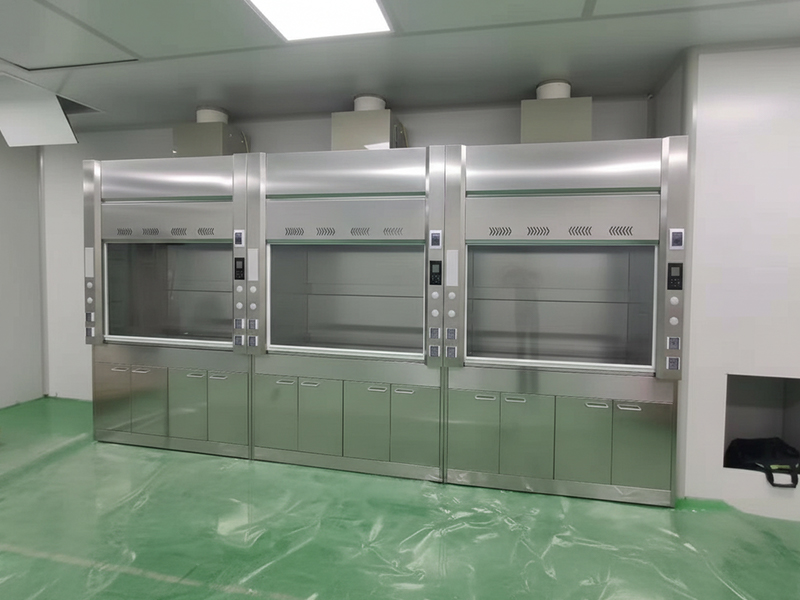
A ducted fume hood pulls contaminated air from inside the hood, pushes it through ductwork, and exhausts it outside the building. Simple concept, but the engineering behind it matters. The exhaust fan sits on the roof or in a mechanical room, creating negative pressure inside the hood. Air gets pulled in through the face opening at a velocity of 0.5 m/s — that's the magic number most safety standards agree on.
The big advantage? It handles virtually anything. Concentrated acids, volatile organics, formaldehyde — ducted hoods don't care what you throw at them because everything goes outside. For chemistry labs at universities like LUMS, NUST, or Quaid-i-Azam University running organic synthesis or analytical chemistry, ducted is really the only responsible choice.
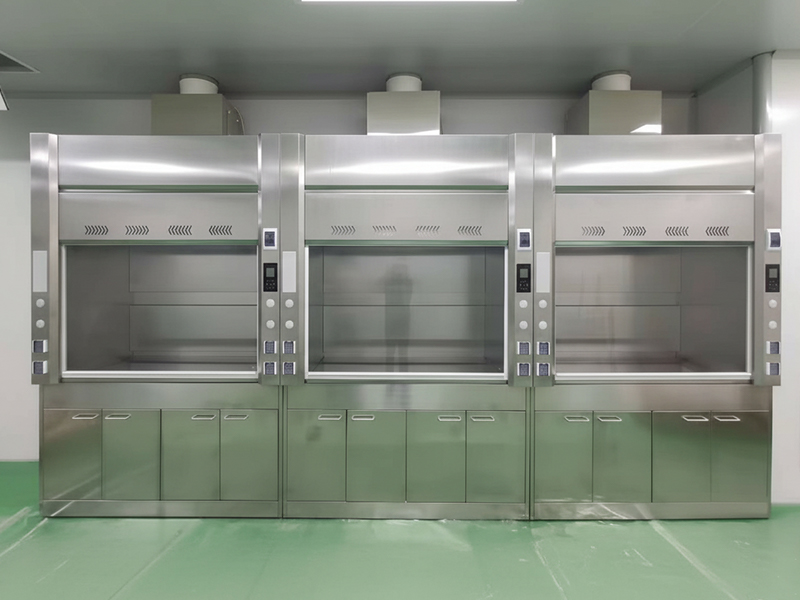
But here's what nobody tells you upfront: the installation cost in Pakistan typically runs 3-5 times higher than the hood itself. You need rooftop ductwork, an exhaust fan rated for corrosive environments, fire dampers, and possibly building modifications. In Karachi's humid climate, galvanized steel ductwork corrodes faster than you'd expect — FRP (fiberglass reinforced plastic) ducts last longer but cost more.
The Ductless Alternative
Ductless fume hoods recirculate filtered air back into the lab. They use activated carbon filters (sometimes combined with HEPA filters) to scrub out chemical vapors before returning the air. No ductwork needed — plug it in, and you're running.
For Pakistan's growing number of quality control labs in the pharmaceutical sector — companies doing tablet dissolution testing, basic wet chemistry, or sample preparation — ductless hoods can work well. The chemicals involved are typically low-concentration acids and solvents that activated carbon handles effectively.
The catch? Filter limitations. Activated carbon doesn't capture everything. Formaldehyde, certain low-molecular-weight gases, and high-concentration solvents can break through. Each filter has a specific capacity, and once it's saturated, you're breathing whatever the hood was supposed to protect you from. HJSLab always recommends installing a breakthrough detector — a sensor that alerts you when the filter is approaching saturation.
Filter replacement adds ongoing cost. Depending on usage, filters need changing every 6-18 months. In Pakistan, where imported specialty filters can face customs delays, keeping spare filters in stock is essential.
Pakistan-Specific Considerations
Power reliability matters more than most people think. A ducted hood with its exhaust fan needs consistent power to maintain safe airflow. During load shedding — still common in many Pakistani cities — the hood stops working. HJSLab recommends connecting ducted hood exhaust fans to backup generators or UPS systems. A ductless hood draws less power and can run on a smaller UPS, which is a practical advantage.
Building infrastructure is another factor. Many labs in Pakistan operate in converted commercial buildings where adding rooftop ductwork isn't feasible. Cutting through concrete floors and walls for duct runs is expensive and sometimes structurally risky. In these situations, ductless hoods offer a realistic path to improved lab safety without major construction.
Climate also plays a role. In Lahore and Islamabad's extreme summers, every cubic meter of conditioned air that a ducted hood exhausts outside needs to be replaced with fresh air that then needs cooling. Annual HVAC costs for a single 6-foot ducted hood can be substantial. Ductless hoods recirculate conditioned air, which keeps energy bills lower.
HJSLab's Recommendation
There's no universal answer, but here's a practical framework. If your lab handles strong acids above 10% concentration, volatile organic solvents regularly, or any carcinogenic materials — go ducted. Safety isn't negotiable. If your work involves low-risk chemicals, quality control testing with dilute solutions, or educational demonstrations — ductless can be a smart, cost-effective choice, provided you maintain the filters diligently.
For labs in between, HJSLab offers hybrid setups: ducted hoods at the high-risk stations and ductless hoods for routine work. This approach optimizes both safety and budget. Contact HJSLab's Pakistan team for a site assessment — the right fume hood choice starts with understanding your specific lab conditions.