Urdu
Urdu Russia
 Turkey
 South Africa
Biosafety labs don't forgive sloppy surfaces. A single crack, seam, or porous spot on your lab bench becomes a breeding ground for bacteria — and in a BSL-2 facility handling pathogenic microorganisms, that's not just a cleaning headache. It's a containment failure waiting to happen.
That's why PP — polypropylene — has become the material of choice for biosafety lab furniture worldwide. And HJSLab, a laboratory equipment manufacturer based in Suzhou, China, has been supplying PP lab benches to biosafety facilities across Pakistan for years.
What Makes PP Inherently Antibacterial
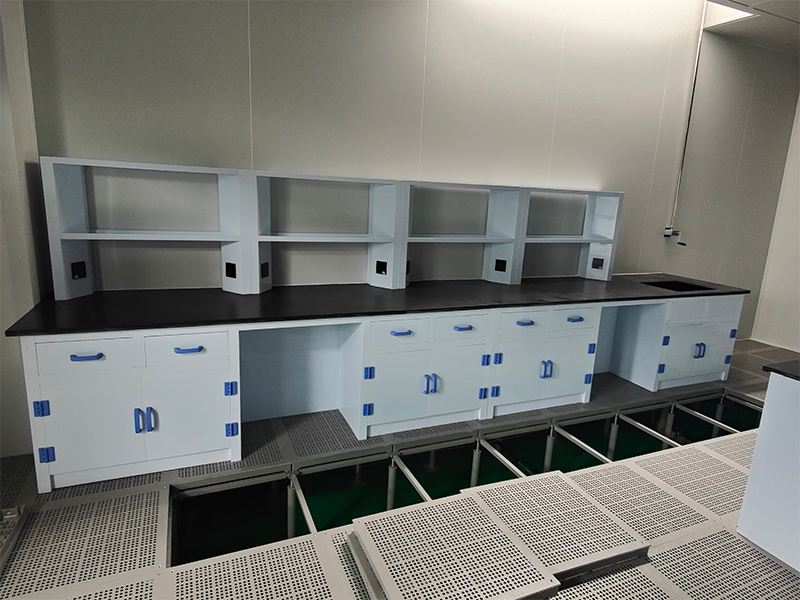
PP isn't antibacterial because someone sprayed a coating on it. It's antibacterial because of what it is. The material is non-porous at the molecular level — there are no microscopic pits or channels where bacteria can hide and multiply. Wipe the surface with a standard disinfectant, and the organisms are gone. There's nowhere for them to retreat.
HJSLab's PP benches take this a step further with one-piece molding. The countertop, backsplash, and drip edges are all formed from a single sheet of PP — no joints, no seams, no silicone caulk that degrades over time. Compare that to epoxy resin tops that need to be bonded to the bench frame with adhesive. Every bond line is a potential contamination point.
Chemical Resistance That Biosafety Labs Demand
Biosafety work isn't gentle on surfaces. You're routinely wiping down with bleach, ethanol, quaternary ammonium compounds, and sometimes peracetic acid. PP handles all of them without discoloration or degradation. HJSLab tests its PP panels against 98% sulfuric acid and 37% hydrochloric acid for 24-hour exposure — both pass without visible damage. That's overkill for routine disinfection, but it tells you the material has serious margin.
The PP thickness on HJSLab benches is 8mm for standard applications and 12mm for high-load situations. Both options come in white or grey — white being preferred for biosafety labs because stains and contamination are immediately visible.
BSL-2 Compliance and Pakistan Regulatory Landscape
Pakistan's biosafety labs — particularly those involved in infectious disease research, veterinary diagnostics, and pharmaceutical microbiology — follow WHO biosafety guidelines that specify smooth, impervious, easy-to-clean work surfaces. PP checks every box. HJSLab provides documentation including material test reports, chemical resistance certificates, and surface porosity test results that satisfy both PSQCA requirements and international BSL-2 audit standards.
Pricing and Delivery to Pakistan
European PP lab bench suppliers charge premium prices — partly because of brand markup, partly because of long supply chains. HJSLab's Suzhou factory produces PP benches at 30 to 40 percent less than equivalent European products. China is one of the world's largest PP resin producers, so raw material costs are inherently lower.
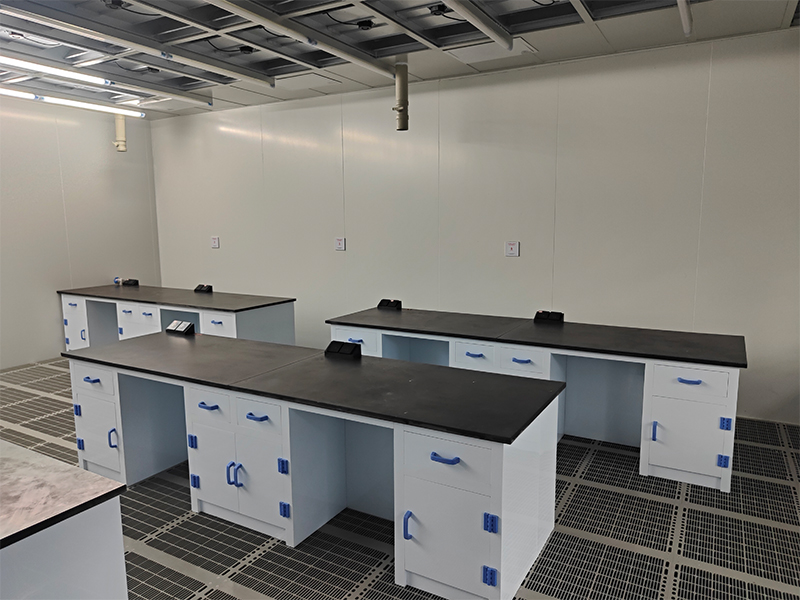
CPEC logistics make the delivery surprisingly smooth. Sea freight from Suzhou to Karachi runs 15 to 18 days. HJSLab ships benches in knock-down flat-pack form to minimize container space, with assembly instructions in English and Urdu. Their technical team offers video-call support during installation — useful when your local contractors haven't worked with PP furniture before.
If you're planning or upgrading a biosafety lab in Pakistan, get in touch with HJSLab for a PP bench specification that matches your biosafety level, chemical exposure profile, and budget.